
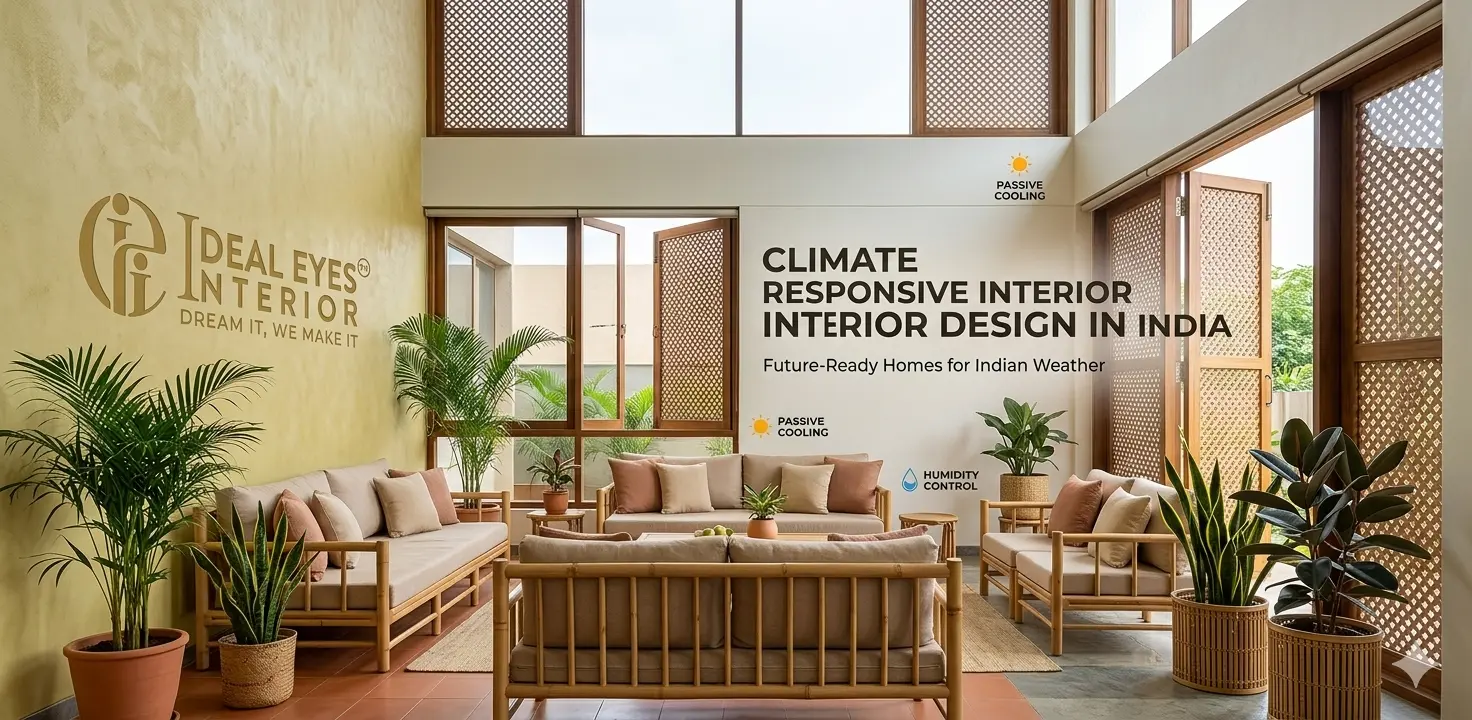
India is a country with diverse climates — from the humid coastal regions of Kerala to the scorching summers of Rajasthan and the cold winters of the northern states. Because of these variations, modern homeowners and designers are increasingly adopting climate-responsive interior design in India to create homes that are comfortable, energy-efficient, and sustainable throughout the year.
Climate-responsive design focuses on adapting interiors to local weather conditions. Instead of relying heavily on artificial cooling or heating systems, this design philosophy uses smart planning, materials, ventilation, and layout strategies to make homes naturally comfortable.
As we move into 2026, climate-friendly interior design is no longer just a trend — it is becoming a necessity for modern Indian homes.
Why Climate-Responsive Interior Design Matters in India
With rising temperatures, increasing electricity costs, and environmental concerns, homeowners are now looking for energy efficient home interiors that reduce dependency on air conditioners and heaters.
A well-designed climate-responsive home can:
- Reduce electricity consumption
- Improve indoor comfort
- Increase property value
- Lower environmental impact
- Create healthier living spaces
India’s traditional architecture actually followed many climate-smart principles. Old homes used thick walls, courtyards, natural ventilation, and shaded verandas. Today’s interior designers are bringing these ideas back with a modern approach.
Understanding India’s Climate Zones
Before designing interiors, it is important to understand the climatic conditions of the region. India broadly has five climate zones:
- Hot and Dry Climate – Rajasthan, Gujarat
- Warm and Humid Climate – Kerala, Goa, coastal areas
- Composite Climate – Delhi, Uttar Pradesh
- Temperate Climate – Bangalore, Pune
- Cold Climate – Himachal Pradesh, Kashmir
Each region requires a different weather responsive home design strategy to maintain comfort.
Smart Interior Design Strategies for Climate Responsive Homes
1. Natural Ventilation and Airflow
One of the most important elements of climate friendly home design is proper airflow. Cross ventilation allows fresh air to circulate naturally throughout the home.
Interior designers often achieve this by:
- Placing windows on opposite walls
- Using ventilated doors and partitions
- Designing open layouts
- Installing ventilated skylights
Natural airflow helps reduce indoor heat and improves air quality without increasing energy usage.
2. Using Climate-Smart Materials
Material selection plays a major role in sustainable interior design in India.
Some climate-friendly materials include:
- Natural stone flooring
- Terracotta tiles
- Bamboo furniture
- Lime plaster walls
- Wooden elements
These materials regulate indoor temperatures naturally and also reduce the carbon footprint of the home.
For example, terracotta floors remain cool even during extremely hot summers.
3. Passive Cooling Interior Design Techniques
Passive cooling interior design focuses on reducing indoor heat without mechanical systems.
Some effective passive cooling techniques include:
- Light colored walls that reflect heat
- Thermal insulation in ceilings
- Indoor plants that regulate humidity
- High ceilings for heat circulation
- Shaded balconies and window treatments
In modern apartments, designers are also using double-glazed windows to reduce heat penetration from outside.
4. Smart Lighting and Energy Efficiency
Lighting plays a huge role in climate-responsive homes. Excess heat from traditional lighting can increase indoor temperature.
Energy-efficient homes use:
- LED lighting systems
- Natural daylight planning
- Reflective surfaces
- Smart lighting automation
Large windows, skylights, and light-colored interiors allow homes to stay bright during the day without excessive artificial lighting.
5. Indoor Plants and Biophilic Design
Another important part of climate responsive interior design in India is incorporating nature into interior spaces.
Indoor plants help:
- Improve air quality
- Maintain humidity levels
- Reduce indoor temperature
- Create calming environments
Popular plants used in climate-friendly interiors include:
- Areca Palm
- Snake Plant
- Rubber Plant
- Peace Lily
- Money Plant
Biophilic design is becoming a major interior design trend in 2026 because it creates healthier and more comfortable homes.
Designing for Summer and Winter Comfort
India experiences extreme temperature variations in many regions. Climate-responsive interiors ensure that homes remain comfortable in both summer and winter.
For summers:
- Use breathable fabrics like cotton and linen
- Choose light colors for walls and furniture
- Use bamboo blinds or curtains
For winters:
- Add layered textiles like rugs and carpets
- Use wooden furniture for warmth
- Install insulated curtains
These small changes can significantly improve thermal comfort.
Technology and Climate Responsive Homes
Modern technology is making weather responsive home design even more efficient.
Some smart features include:
- Smart thermostats
- Automated blinds
- Smart ventilation systems
- Energy monitoring systems
These technologies help homeowners manage indoor climate while reducing energy consumption.
In many Indian cities, smart homes now combine technology with sustainable interior design principles to create future-ready living spaces.
The Future of Interior Design in India
As climate challenges increase, climate responsive interior design in India will become a key focus for architects and interior designers.
Homeowners are now more aware of sustainability and energy efficiency. Instead of focusing only on aesthetics, people want homes that are practical, environmentally responsible, and comfortable throughout the year.
Future-ready homes will combine:
- Sustainable materials
- Smart technology
- Natural ventilation
- Climate-friendly layouts
By adopting these strategies, homeowners can create interiors that are both beautiful and environmentally responsible.
Final Thoughts
Climate-responsive interior design is shaping the future of modern homes in India. By adapting interior spaces to local weather conditions, homeowners can create comfortable, sustainable, and energy-efficient living environments.
From natural ventilation and passive cooling to smart materials and biophilic elements, these design strategies ensure that homes remain functional in every season.
As we move toward a more sustainable future, climate-responsive interior design in India will continue to redefine how homes are designed and experienced.
FAQ
Q. What is climate-responsive interior design in India?
Climate-responsive interior design in India focuses on designing homes that adapt to local weather conditions. It uses natural ventilation, sustainable materials, and smart layouts to maintain indoor comfort while reducing energy consumption.
Q. How does climate-responsive interior design reduce electricity bills?
Climate-responsive interiors use passive cooling techniques, proper insulation, and natural lighting. These strategies reduce the need for air conditioners and artificial lighting, which helps homeowners lower their electricity costs.
Q. Which materials are best for climate-responsive interior design in India?
Materials like terracotta tiles, natural stone, bamboo, lime plaster, and wooden finishes are ideal for climate-responsive homes because they regulate indoor temperature and support sustainable interior design.
Q. What are passive cooling techniques in interior design?
Passive cooling techniques include cross ventilation, high ceilings, shaded windows, indoor plants, and reflective wall colors. These design strategies naturally keep interiors cool without heavy use of mechanical cooling systems.
Q. Why is climate-responsive interior design important for modern homes?
With rising temperatures and increasing energy costs, climate-responsive interior design helps create energy-efficient, sustainable, and comfortable homes that remain suitable for changing weather conditions.